
Experience. Innovation. Results.
HAZEMAG
Technology

Presented by:
Craig Mitchell - Hazemag
Craig Mitchell - Hazemag
December 16, 2025

HAZEMAG
Technology

Impactor Theory
A Brief History
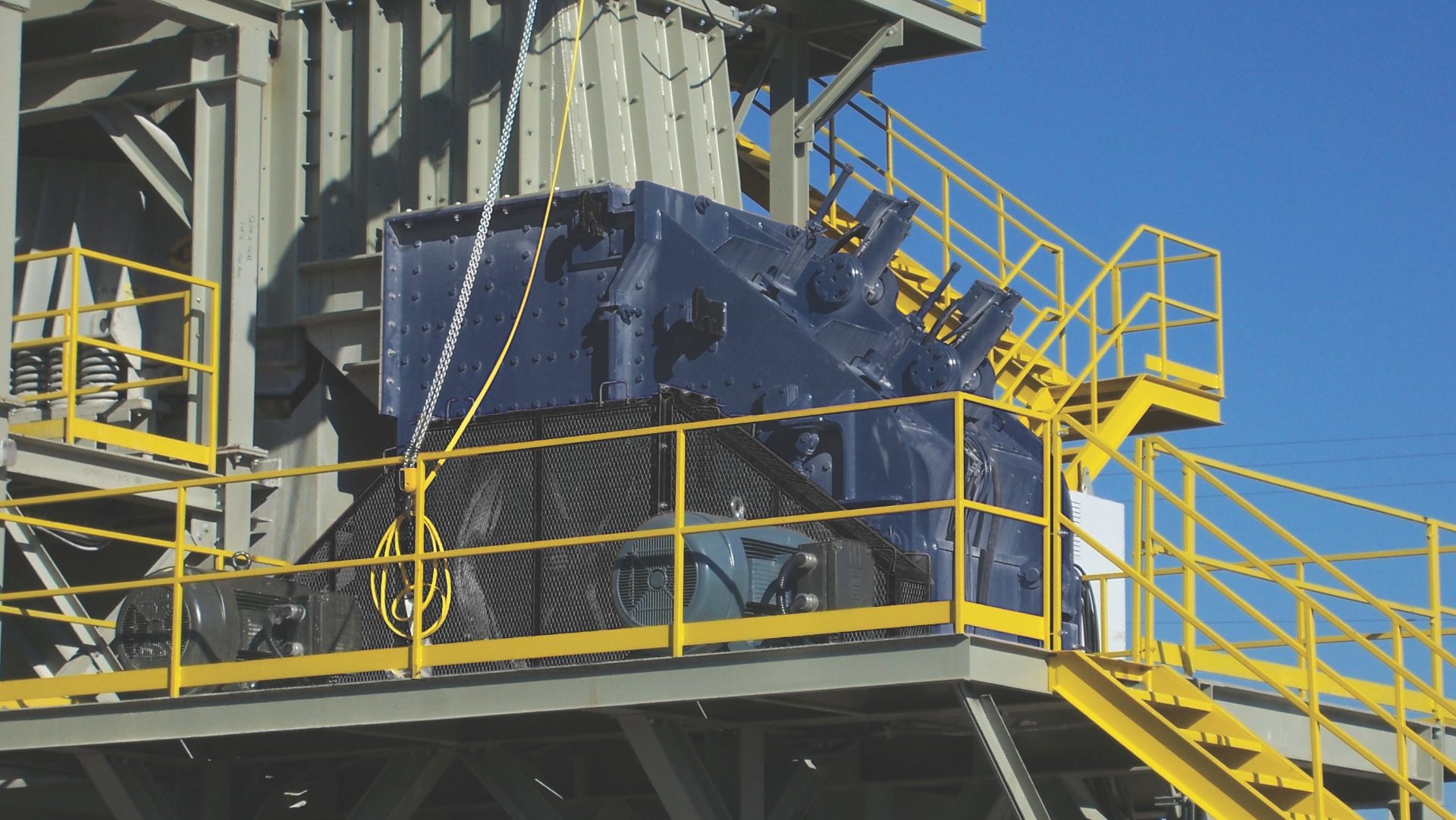


Dr. Erhard Andreas
The founder of HAZEMAG.
The founder of HAZEMAG.
The Impact Principle
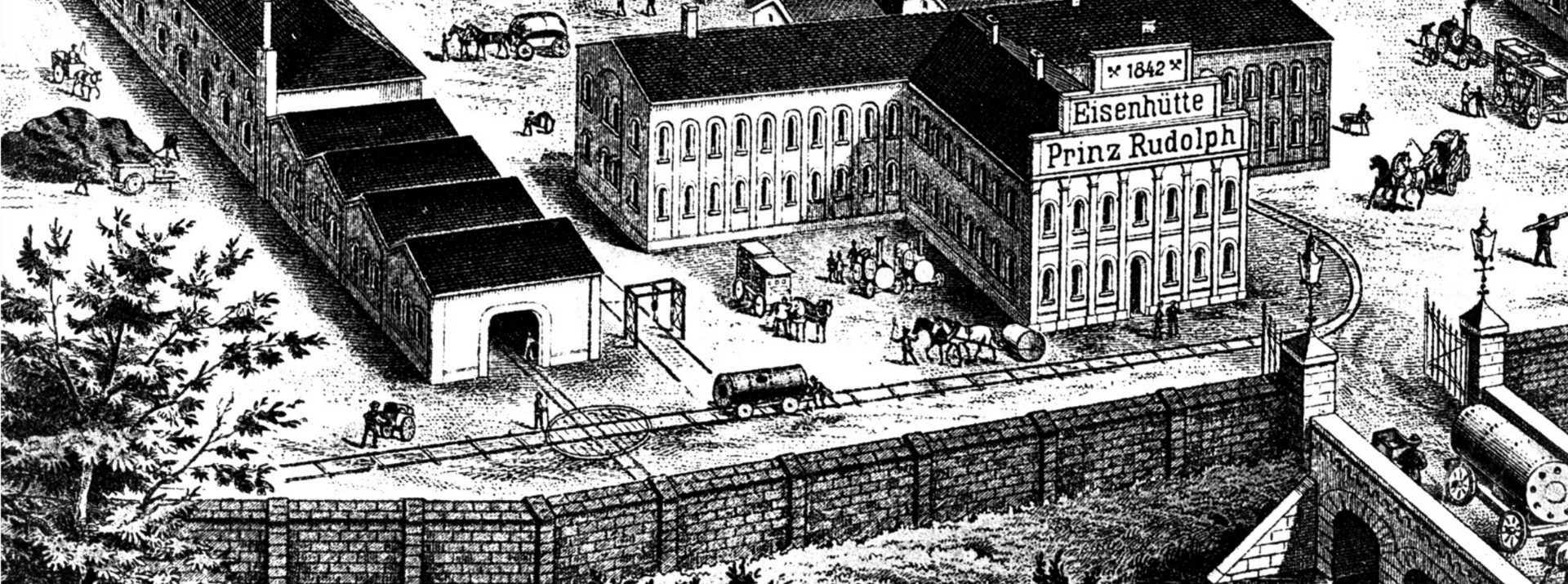
■ The thought of breaking ore, minerals or other related
materials through the “impact principle” was originally
registered or patented back in 1842.
materials through the “impact principle” was originally
registered or patented back in 1842.
■ BUT, the idea never took off and was lost for almost 100
years – possibly because the technology did not exist for
control of high speed rotating bodies.
years – possibly because the technology did not exist for
control of high speed rotating bodies.
■ In 1946, this principle was revitalized when the “Andreas
System” was patented in Germany.
System” was patented in Germany.
■ “Andreas-style” impactors were developed by HAZEMAG
in Germany initially to clear the rubble left after the
destruction of WWII.
in Germany initially to clear the rubble left after the
destruction of WWII.
■ The success of this style of crushing has led to well over
100,000 impactors being installed around the world over
the last 75 years.
100,000 impactors being installed around the world over
the last 75 years.
Method of Operation
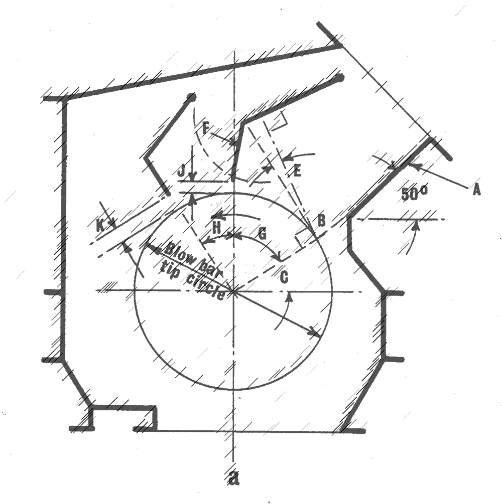
■ The “Andreas System” was designed with
two gravity hung impact aprons.
two gravity hung impact aprons.
■ This design created two impact chambers,
assuring high reduction ratios
assuring high reduction ratios
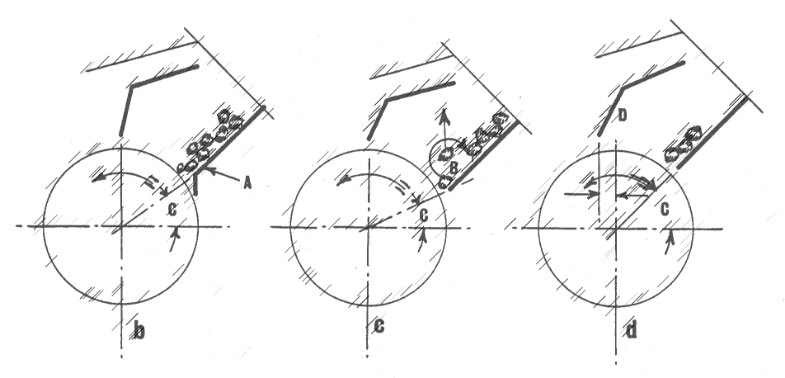
■ Reduction of the materials was achieved
by true impact, not grinding or compressing.
by true impact, not grinding or compressing.
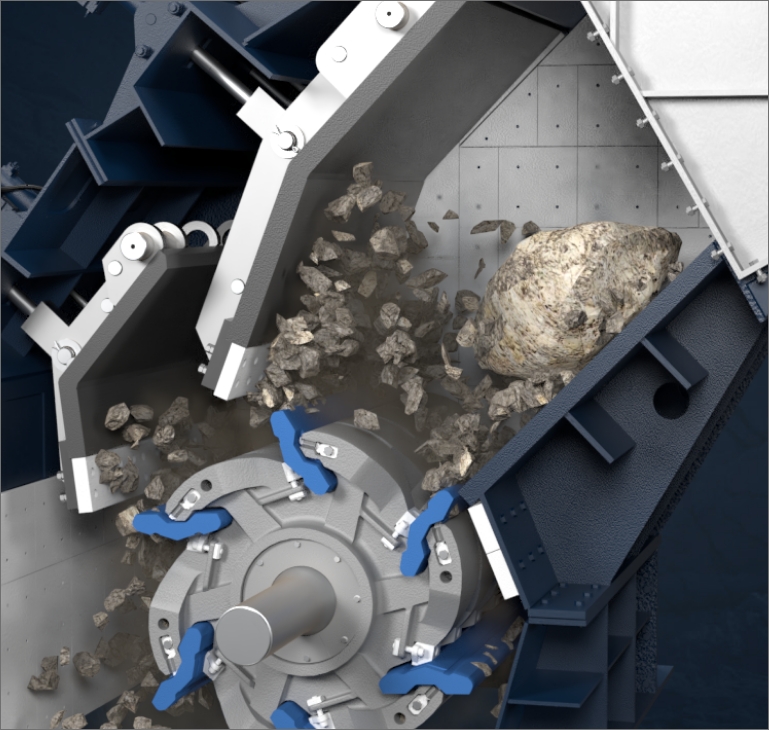
■ Blow Bars rotate at high speed and crush
(impact) the material as it is falling free in air.
(impact) the material as it is falling free in air.
Main Components
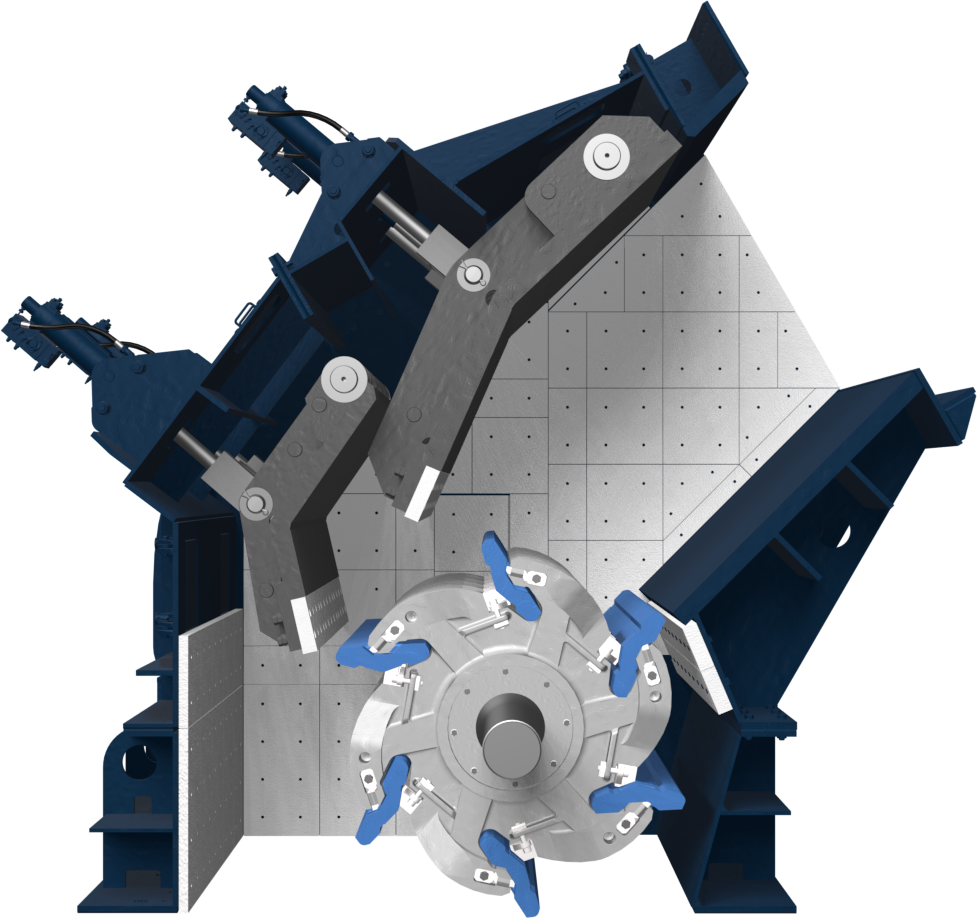
Housing
Front
Impact Apron
Impact Apron
Rear
Impact Apron
Impact Apron
Discharge
Inlet
Blowbar
Rotor
Crushing by Impact
Controlling Output Gradation
Gap Setting:
Tighter gap settings reduces overall
gradation, with more shift in top size,
capable of modifying output for a
variety of desired products.
gradation, with more shift in top size,
capable of modifying output for a
variety of desired products.
Rotor Speed:
Rotor speed has biggest influence on
product, with higher speeds increasing
percentage passing finer sizes and
biggest impact to reducing top size.
product, with higher speeds increasing
percentage passing finer sizes and
biggest impact to reducing top size.
Third Crushing
Path:
Path:
Reduces top size with smaller impact
to fines, particularly well suited to
maximize -¾” product, most often
desired as feed to cement mills.
to fines, particularly well suited to
maximize -¾” product, most often
desired as feed to cement mills.
Factors Effecting Wear
Product Chemistry
■ Impactors are well suited for low to medium hard and abrasive
material. Free silica is most important (lower is better), which
makes limestone the ideal material to crush by impact
material. Free silica is most important (lower is better), which
makes limestone the ideal material to crush by impact
Moisture
■ Increasing moisture has a rapid affect on increasing wear
Rotor Speed
■ Faster speeds lead to increased wear
Wear Metal Alloy
■ Moving to more brittle chrome alloys increases wear
resistance, but is limited by feed size and hardness
resistance, but is limited by feed size and hardness
Proper Feed Rate /
of Machine
of Machine
■ Overfeeding the machine increases wear (grinding)
■ Underfeeding increases wear as well – high speed passing
through fine silica “cloud”
■ Underfeeding increases wear as well – high speed passing
through fine silica “cloud”
Third Crushing Path
■ Addition of a third crushing path increases wear
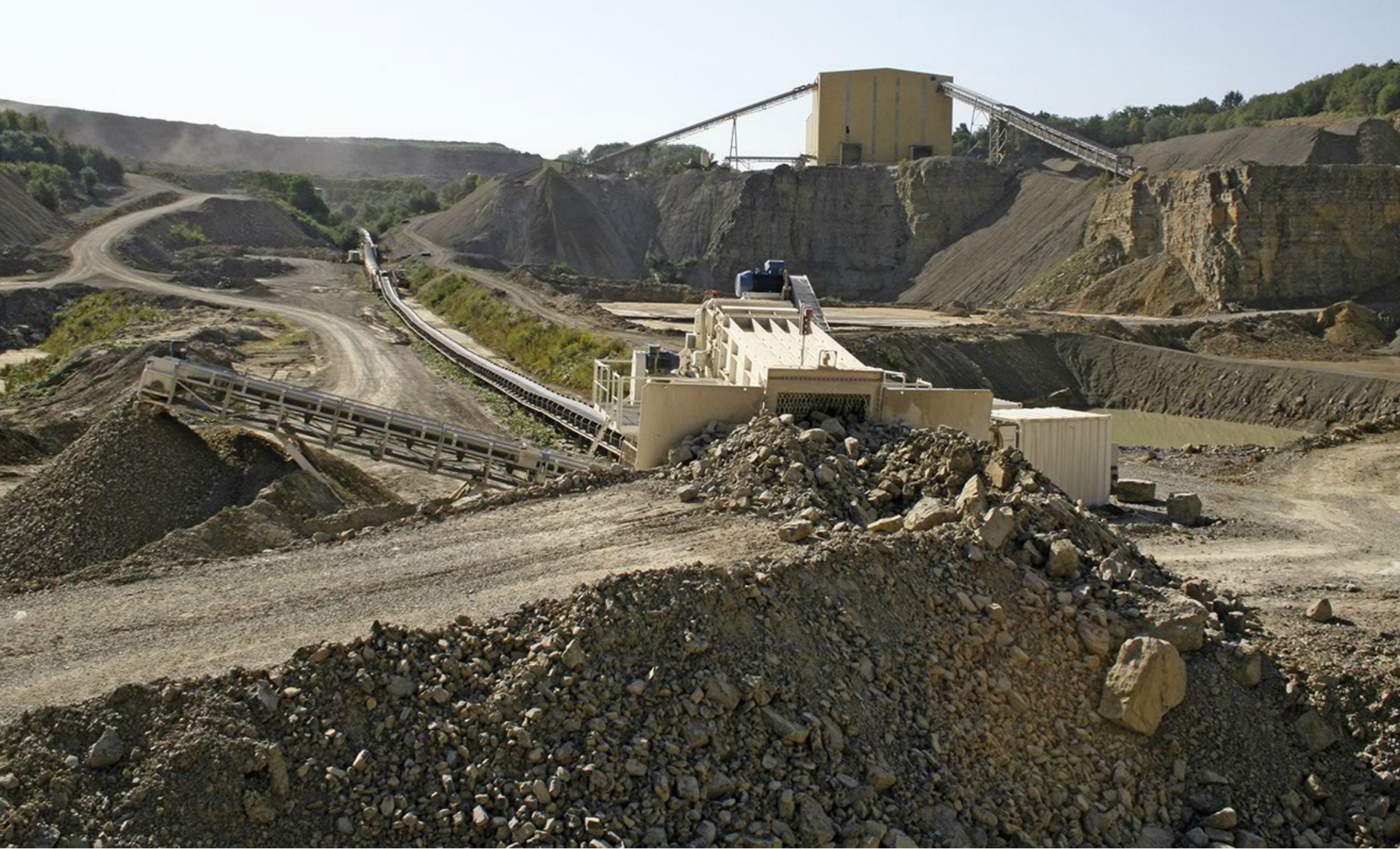
HAZEMAG
Impacting the Future
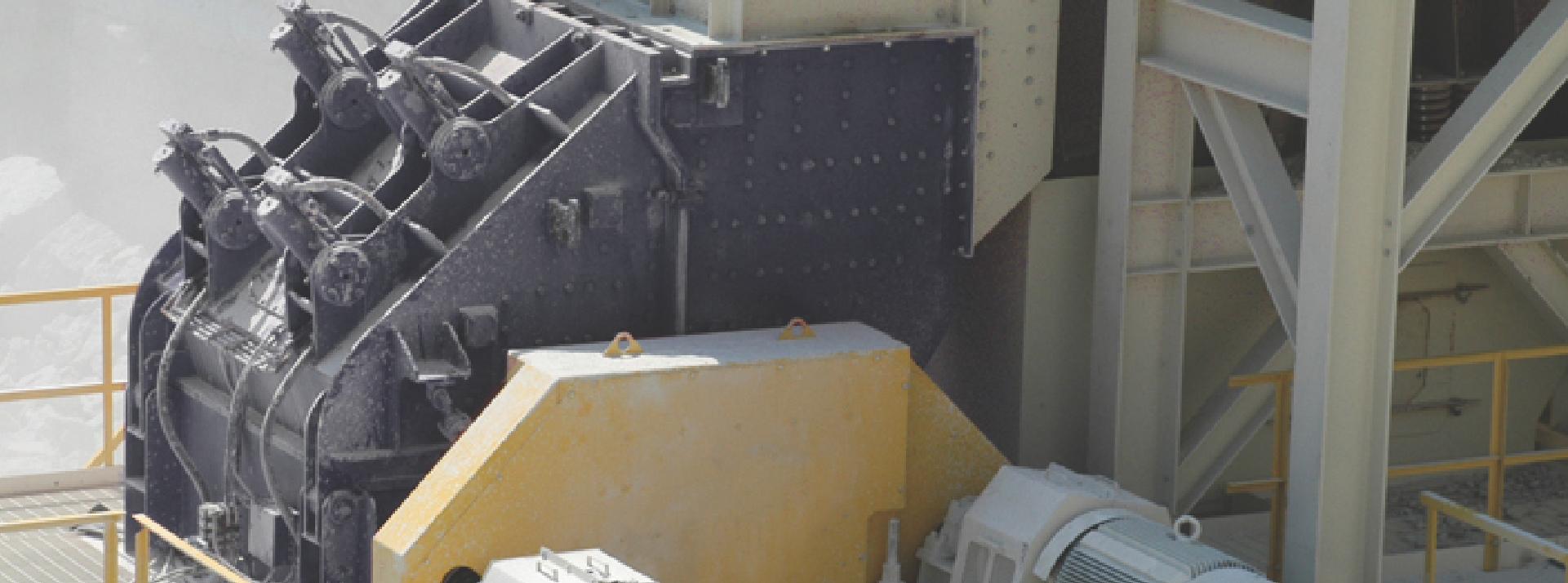

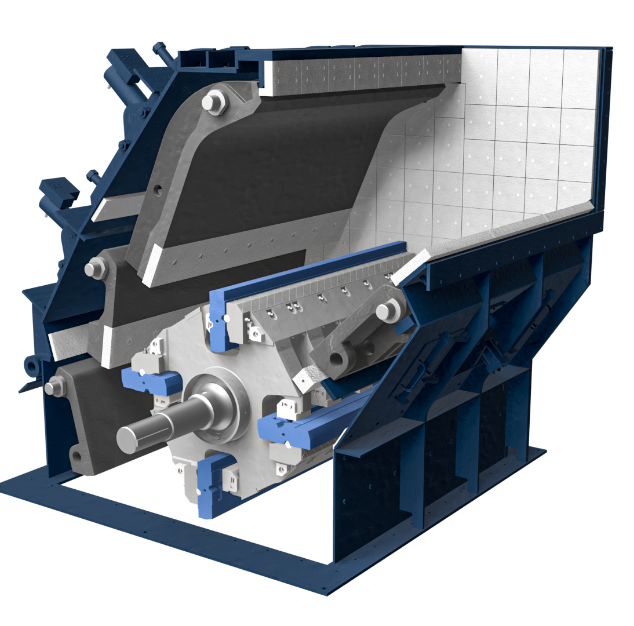
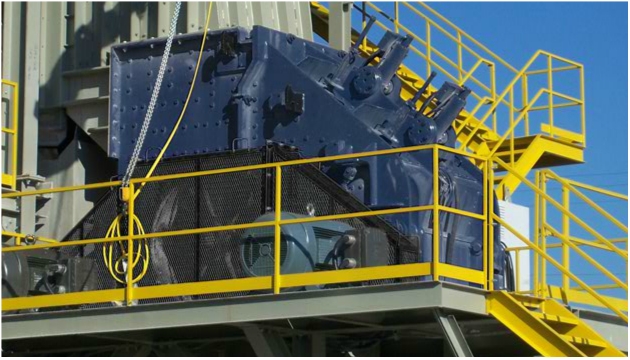
HAZEMAG HPI-H Primary Impactor

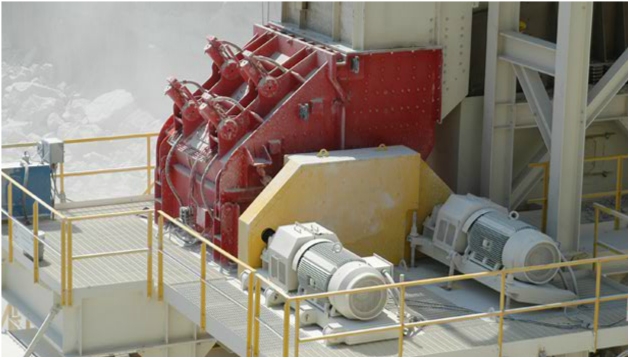
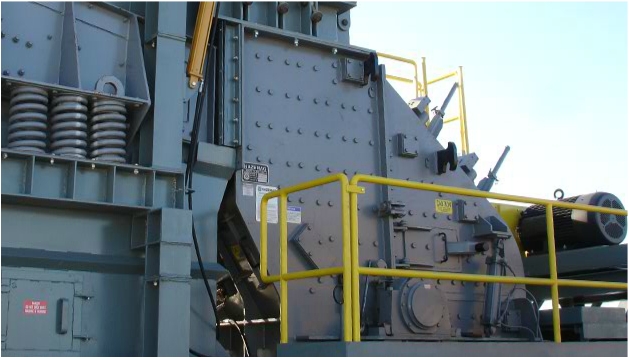
For processing of
medium hard materials.
Limestone, Dolomite, etc.
medium hard materials.
Limestone, Dolomite, etc.
◼︎ High Reduction Ratio
◼︎ Ability to process large feed
◼︎ Excellent product shape and quality
◼︎ Consistent product grading
◼︎ Capacities to 300 stph
◼︎ Economical Operation
◼︎ Up to 40" feed material
◼︎ Tramp Relief Protection
◼︎ Ability to process large feed
◼︎ Excellent product shape and quality
◼︎ Consistent product grading
◼︎ Capacities to 300 stph
◼︎ Economical Operation
◼︎ Up to 40" feed material
◼︎ Tramp Relief Protection
HAZEMAG HPI-H Primary Impactor
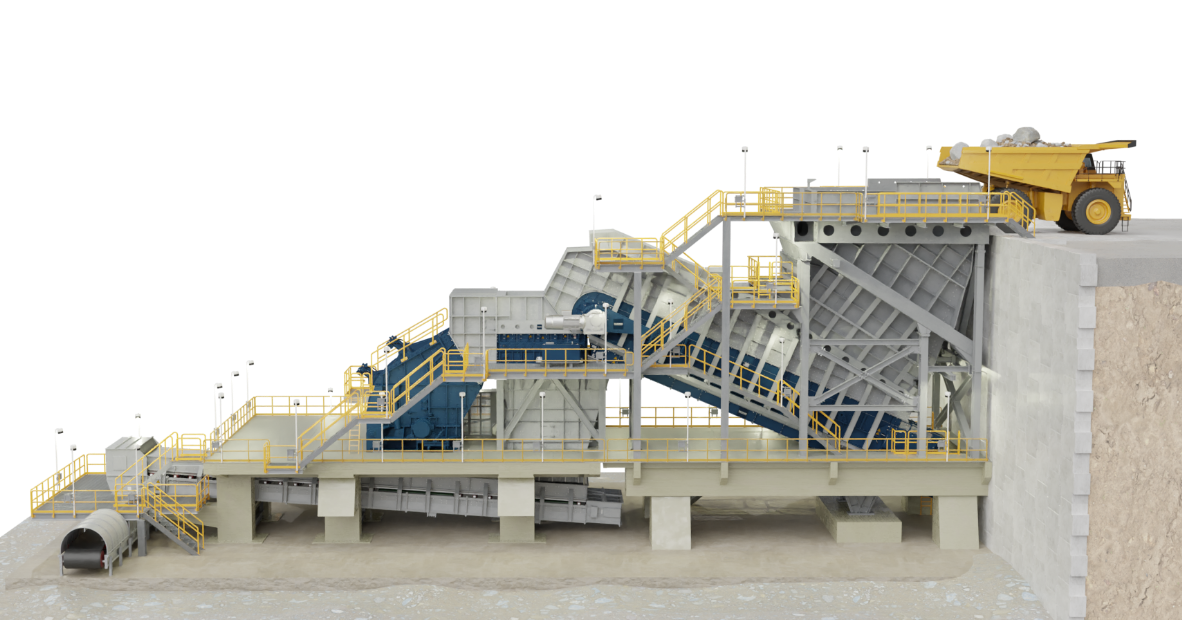

HAZEMAG HPI-H Primary Impactor

HPI-H
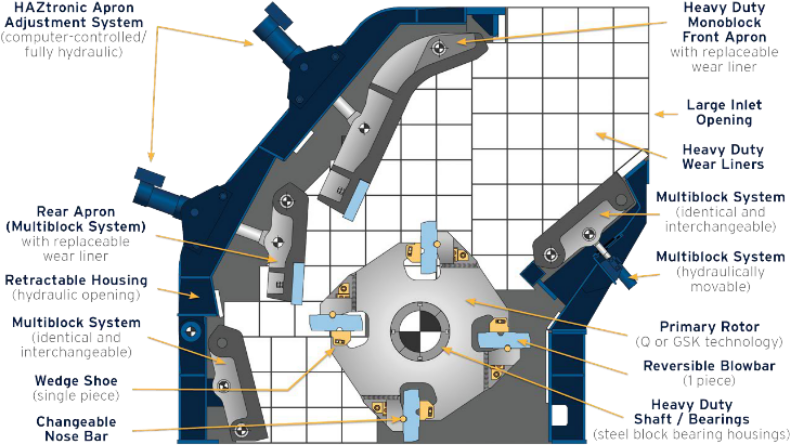
■ Housing System
■ Aprons
■ Rotor System
■ Control Technology
■ Aprons
■ Rotor System
■ Control Technology
HAZEMAG HPI-H Primary Impactor
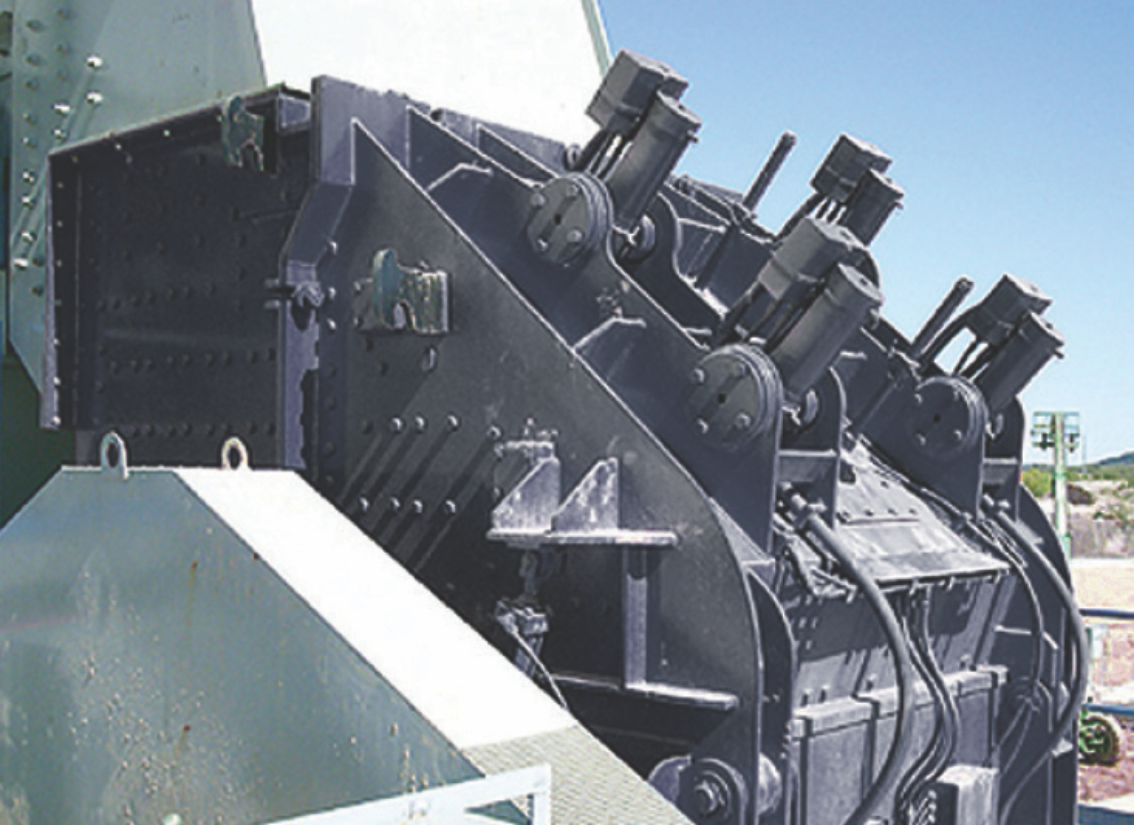
HPI-H
Housing System
■ Heavy Duty
■ External Bracing
■ Stress Relieved
■ Large Inspection Doors
■ Hydraulic Opening
■ Double Acting Cylinders
■ Tramp Relief Protection
■ External Bracing
■ Stress Relieved
■ Large Inspection Doors
■ Hydraulic Opening
■ Double Acting Cylinders
■ Tramp Relief Protection
HAZEMAG HPI-H Primary Impactor
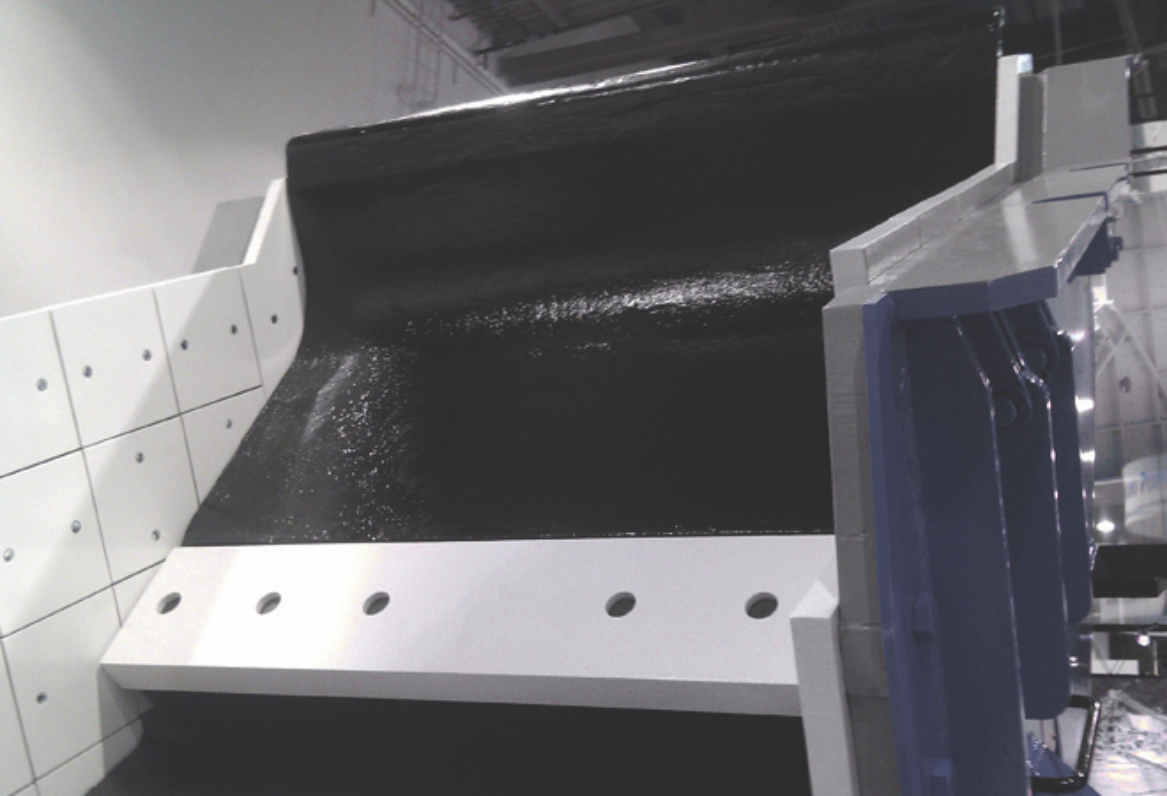
HPI-H
Aprons
■ Heavy Duty
■ Front Monoblock
■ Replaceable Wear Liners
■ Front Monoblock
■ Replaceable Wear Liners
HAZEMAG HPI-H Primary Impactor
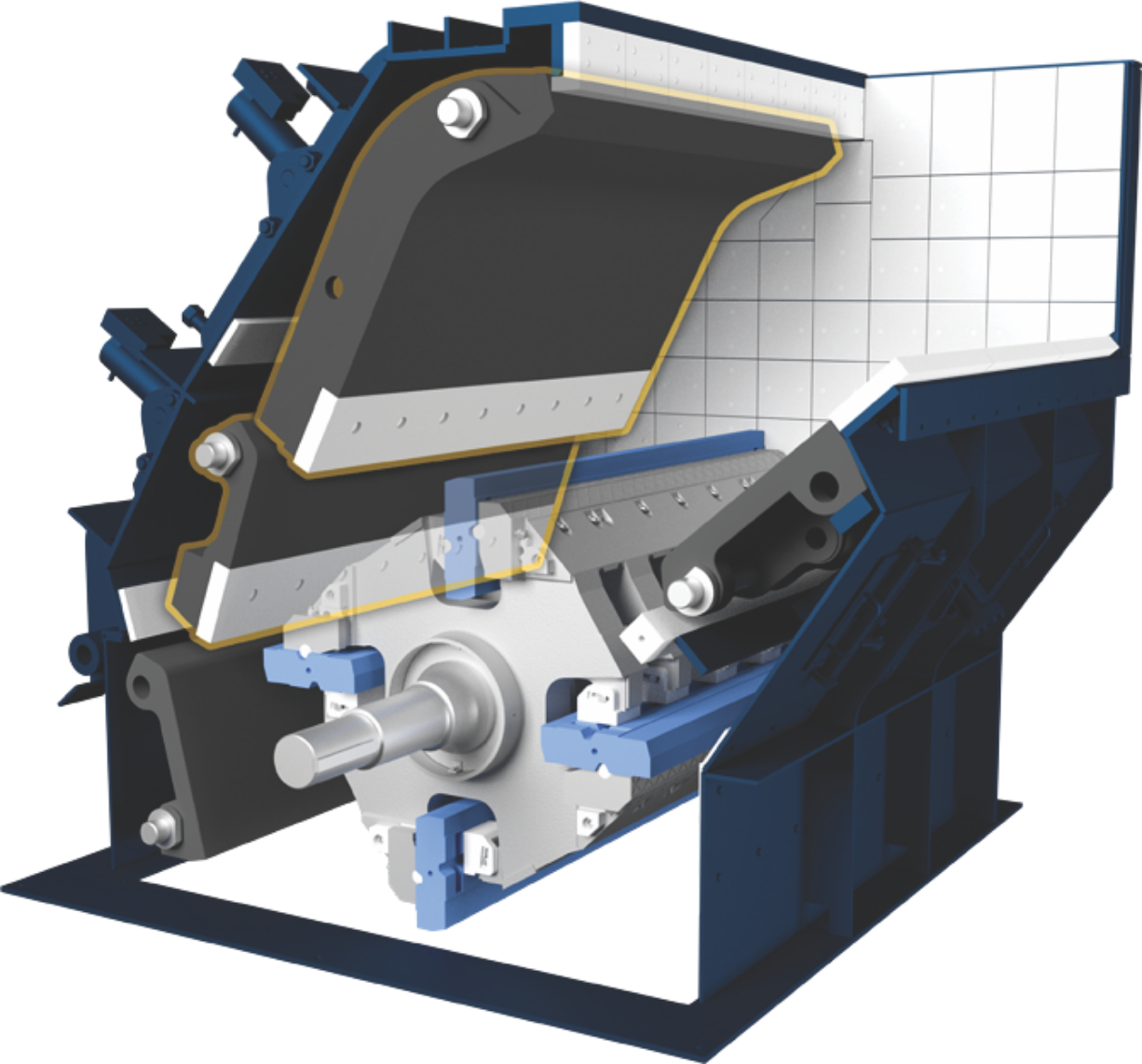
HPI-H
Impact Aprons
■ Welded Monoblock Design
■ Leading Edge Liners:
Hardox 450
■ Heavy Duty Construction
■ Leading Edge Liners:
Hardox 450
■ Heavy Duty Construction
HAZEMAG HPI-H Primary Impactor
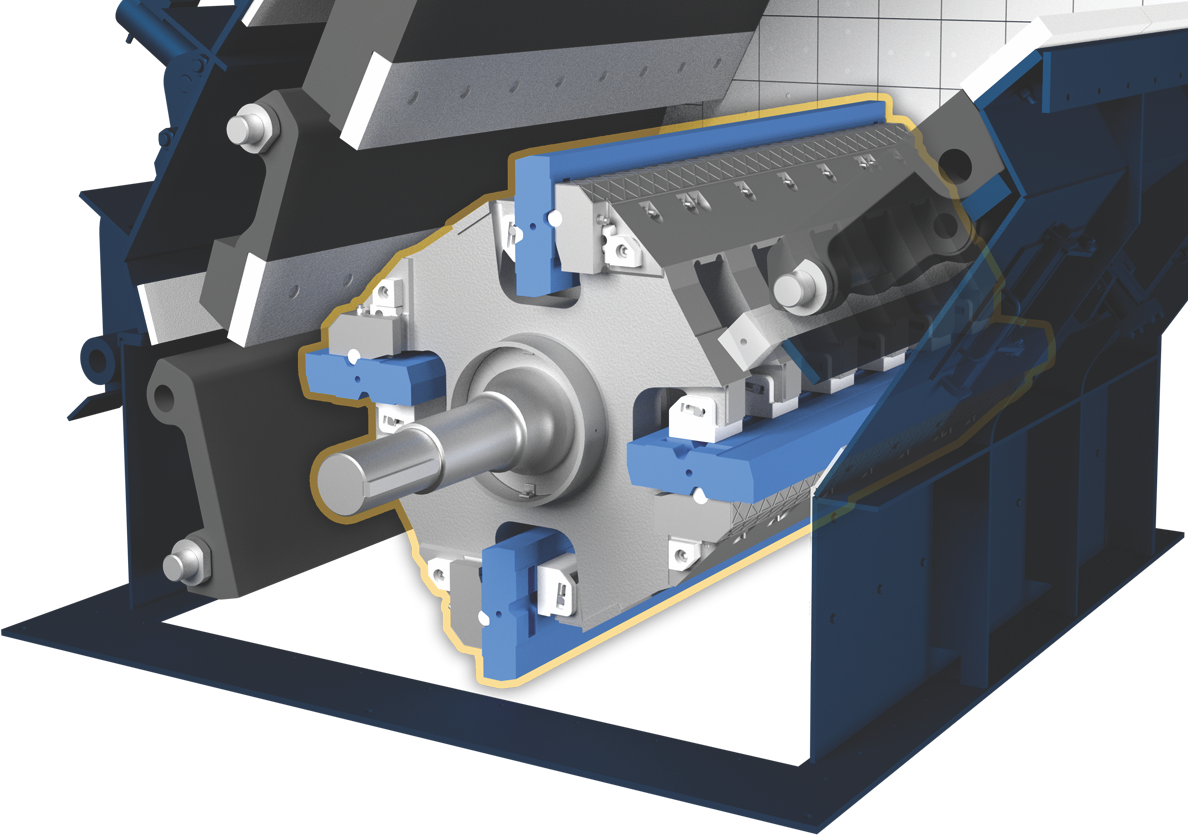
HPI-H
Rotor System
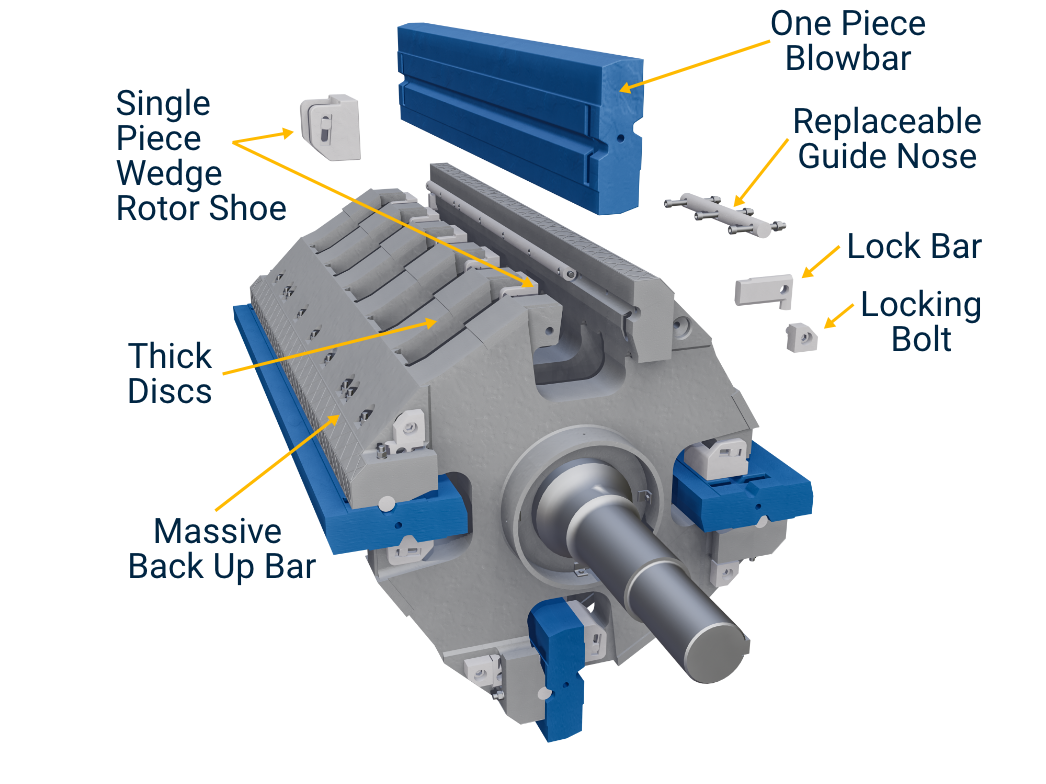
■ Heavy Duty “Q Rotor”
■ High Inertia
■ 4 Row Design
■ Reversible Blowbars
■ High Inertia
■ 4 Row Design
■ Reversible Blowbars
HAZEMAG HPI-H Primary Impactor
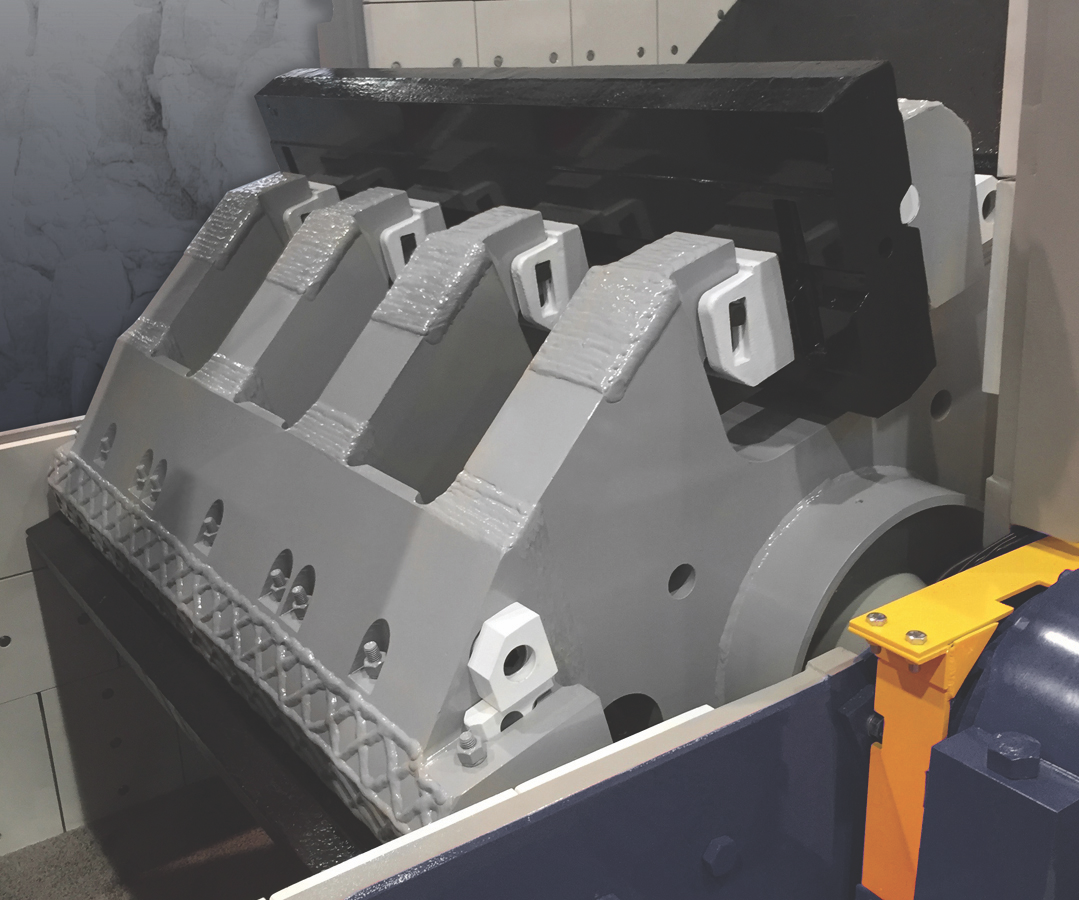
HPI-H
Rotor System
■ Heavy Duty “Q Rotor”
■ High Inertia
■ 4 Row Design
■ Reversible Blowbars
■ High Inertia
■ 4 Row Design
■ Reversible Blowbars
HAZEMAG HPI-H Primary Impactor
HPI-H
Rotor System
■ Heavy Duty “Q Rotor”
■ High Inertia
■ 4 Row Design
■ Reversible Blowbars
■ High Inertia
■ 4 Row Design
■ Reversible Blowbars
HAZEMAG HPI-H Primary Impactor
HPI-H
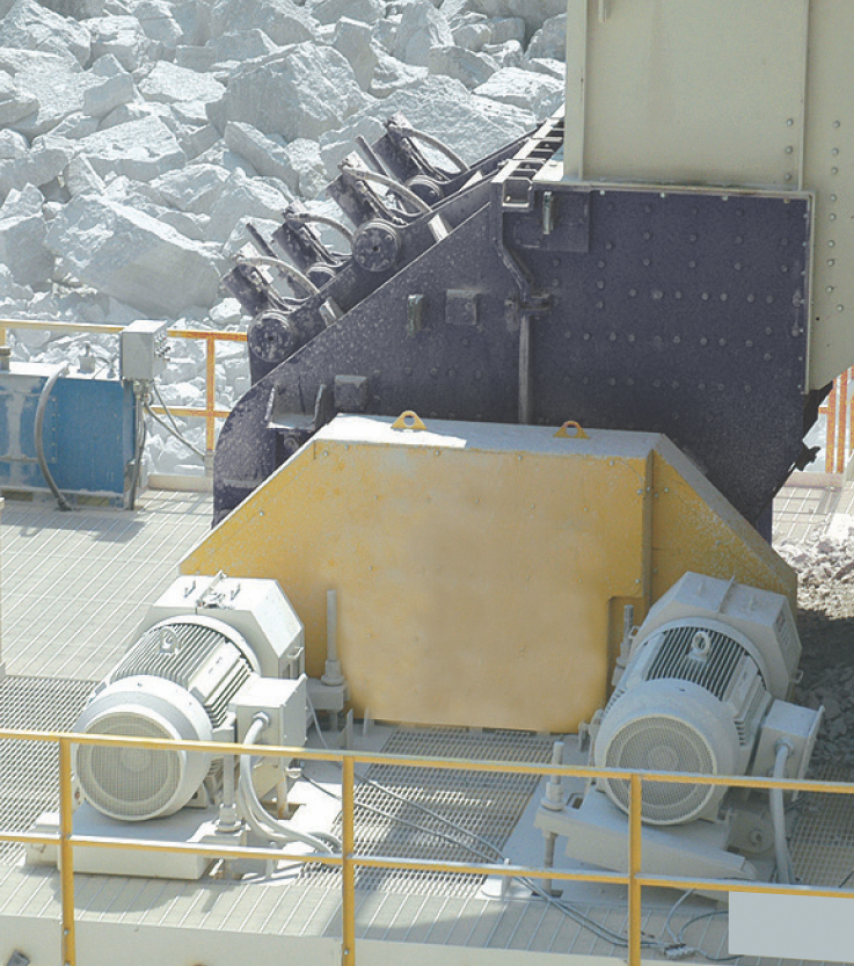
Drive System
■ Heavy Duty Base Frame
(Jackshaft system)
■ Sheaves & Belts
■ Mechanical Coupling
■ Protective Guards
(Jackshaft system)
■ Sheaves & Belts
■ Mechanical Coupling
■ Protective Guards
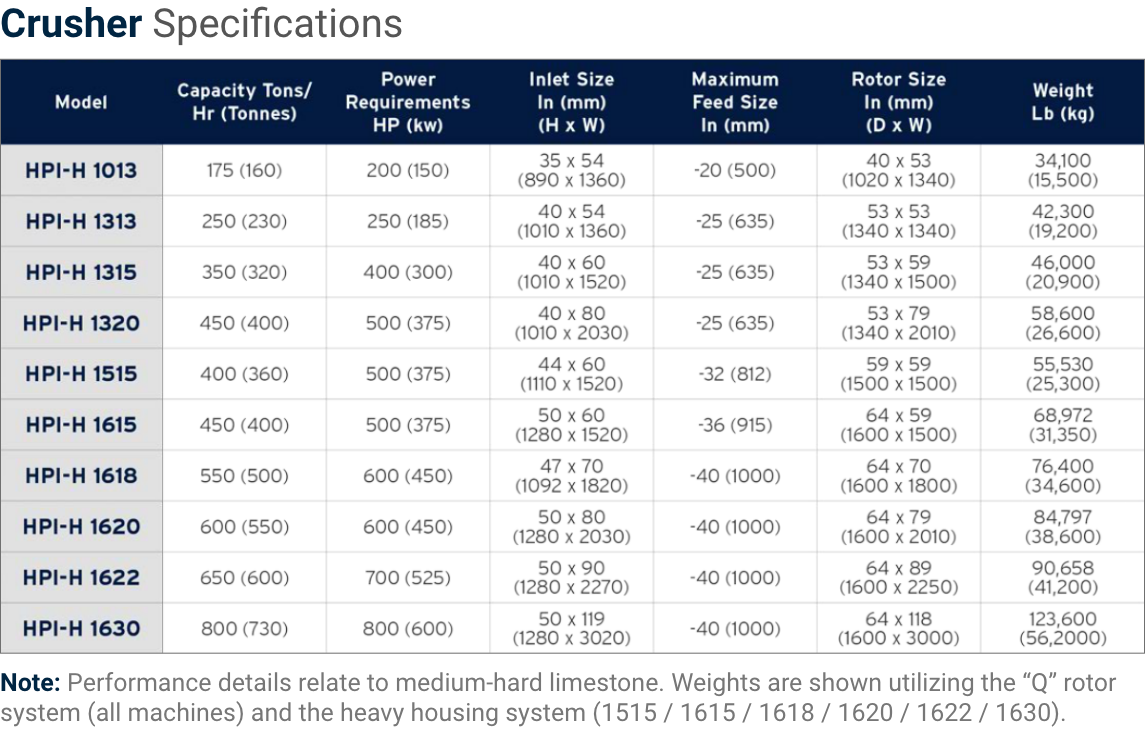
Crusher Motor
■ 200 - 800 HP
■ 800 RPM
■ 800 RPM
HAZEMAG HPI-H Primary Impactor


HAZEMAG HPI-H Primary Impactor
HAZEMAG HPI-H Primary Impactor
Duty:
Typical Industry:
Stone:
Construction:
Capacity:
Typical Industry:
Stone:
Construction:
Capacity:
Primary
Aggregate / Recycling
Mildly Abrasive
Extra Heavy-Duty
175 - 800 TPH
Aggregate / Recycling
Mildly Abrasive
Extra Heavy-Duty
175 - 800 TPH
HAZEMAG HPI-H Primary Impactor

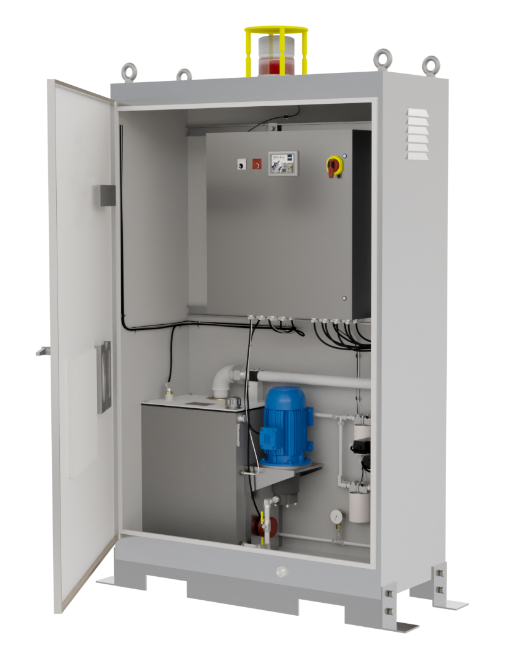
HAZtronic
Apron Control System
HAZtronic Apron Control Technology
HAZtronic Support Technology
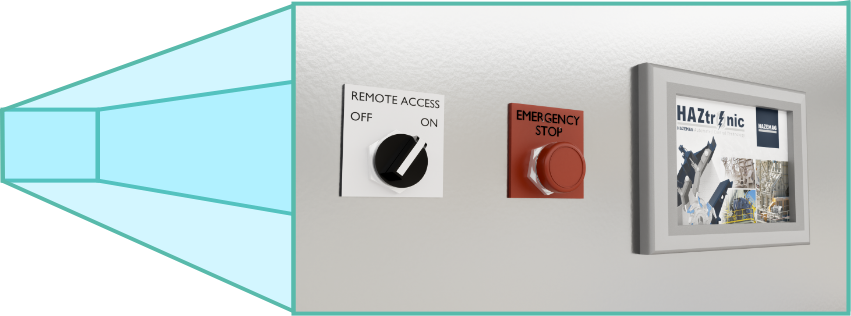
The HAZtronic Off-site Support Technology (HOST) System offers a level of support that can save our customers time and money.
Once the Remote Access is turned “on” and a Hazemag Technician is notified, this system allows HAZEMAG technicians to remotely access the Program Logic Controller (PLC) inside the HAZtronic Cabinet. This allows our technician the ability to update the program, analyze the recorded data, check the status of machine operations, alarm histories, and assess any issues that may be occurring. This helps the technician diagnose any performance issues without the need for an on-site service visit. When the technician is finished, the Remote Access can be turned to the “off” position.
Once the Remote Access is turned “on” and a Hazemag Technician is notified, this system allows HAZEMAG technicians to remotely access the Program Logic Controller (PLC) inside the HAZtronic Cabinet. This allows our technician the ability to update the program, analyze the recorded data, check the status of machine operations, alarm histories, and assess any issues that may be occurring. This helps the technician diagnose any performance issues without the need for an on-site service visit. When the technician is finished, the Remote Access can be turned to the “off” position.

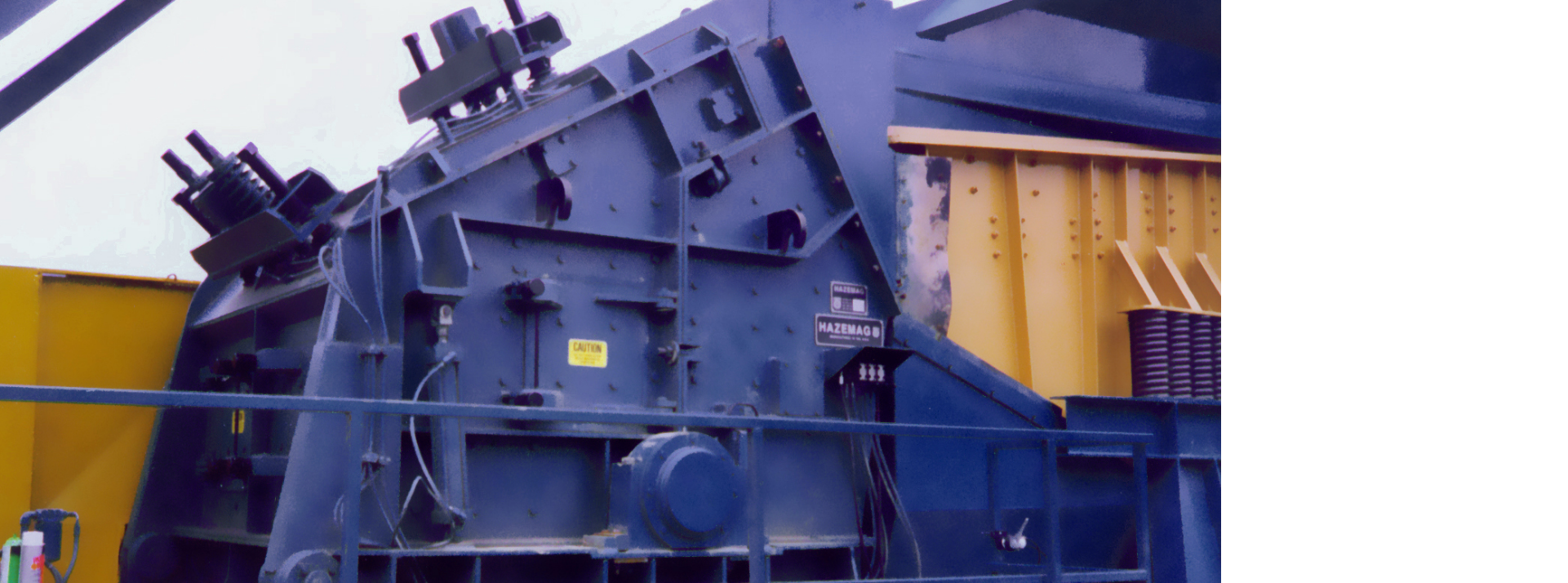
 For processing of
 medium hard materials.
Limestone, Dolomitic
Limestone, etc.

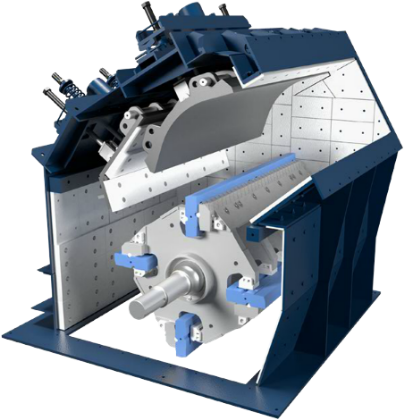
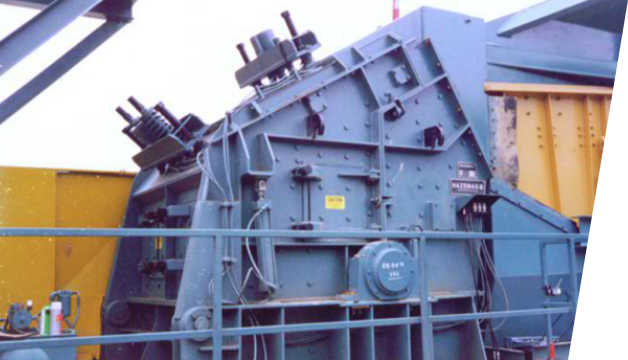
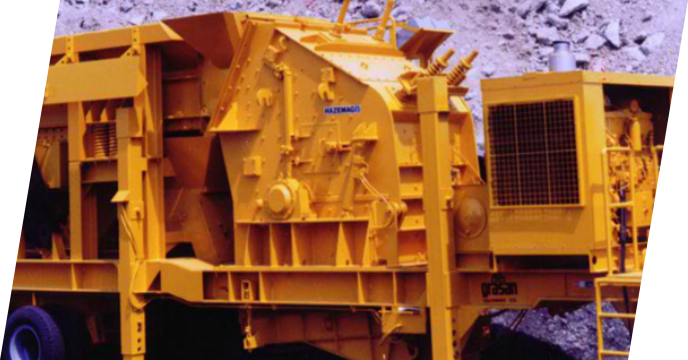
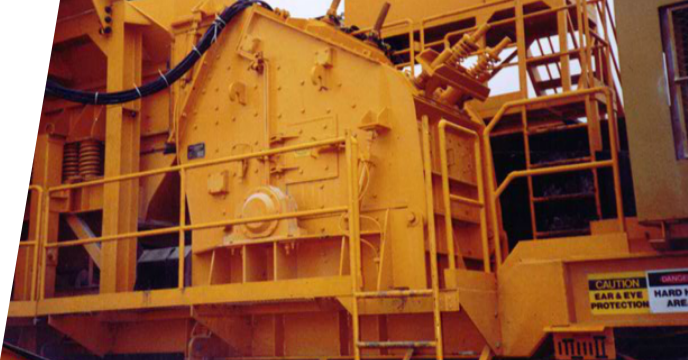
For processing medium hard materials.
Limestone, Dolomitic
Limestone, Concrete,
Asphalt, etc.
Limestone, Dolomitic
Limestone, Concrete,
Asphalt, etc.
◼︎ High Reduction Ratio
◼︎ Ability to process large feed
◼︎ Excellent product shape and quality
◼︎ Consistent product grading
◼︎ Capacities to 600 stph
◼︎ Economical Operation
◼︎ Ability to process large feed
◼︎ Excellent product shape and quality
◼︎ Consistent product grading
◼︎ Capacities to 600 stph
◼︎ Economical Operation
HAZEMAG APSE Primary Impactor

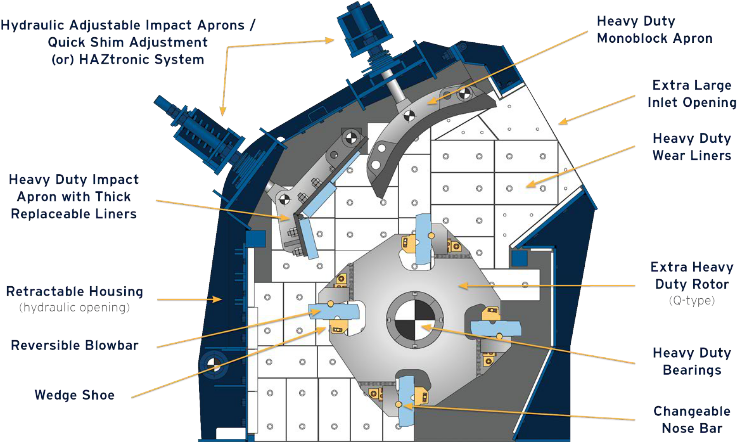
Duty:
Typical Industry:
Stone:
Construction:
Capacity:
Typical Industry:
Stone:
Construction:
Capacity:
Primary
Recycling
Mildly Abrasive
Heavy-Duty
100 - 600 TPH
Recycling
Mildly Abrasive
Heavy-Duty
100 - 600 TPH
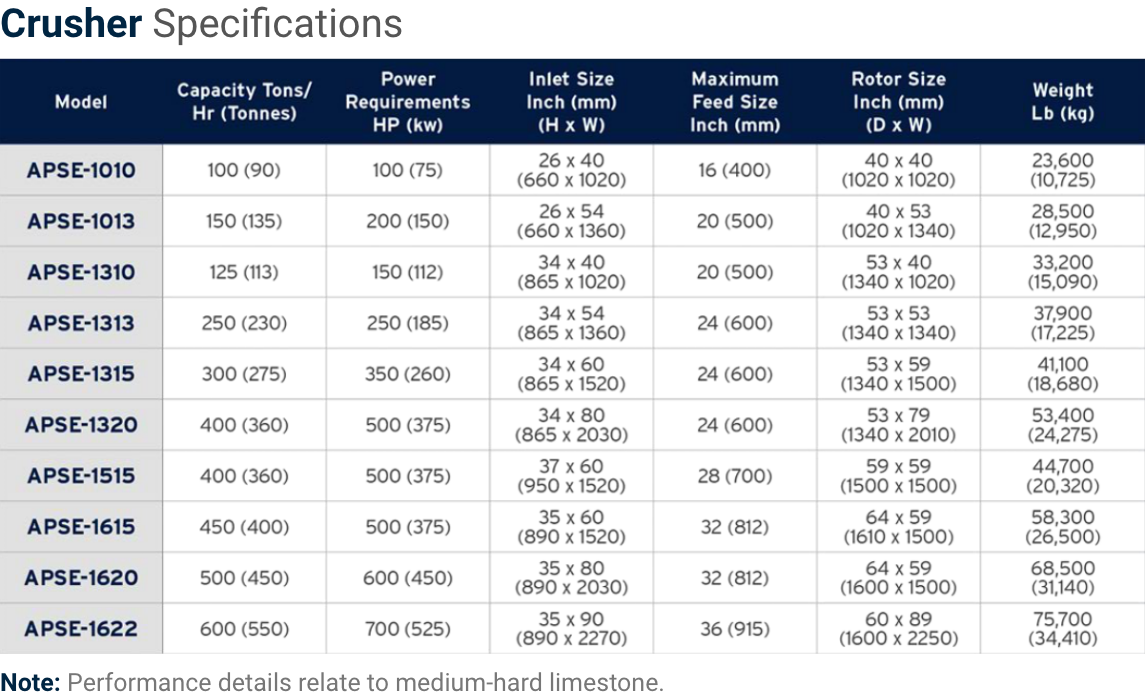
HAZEMAG
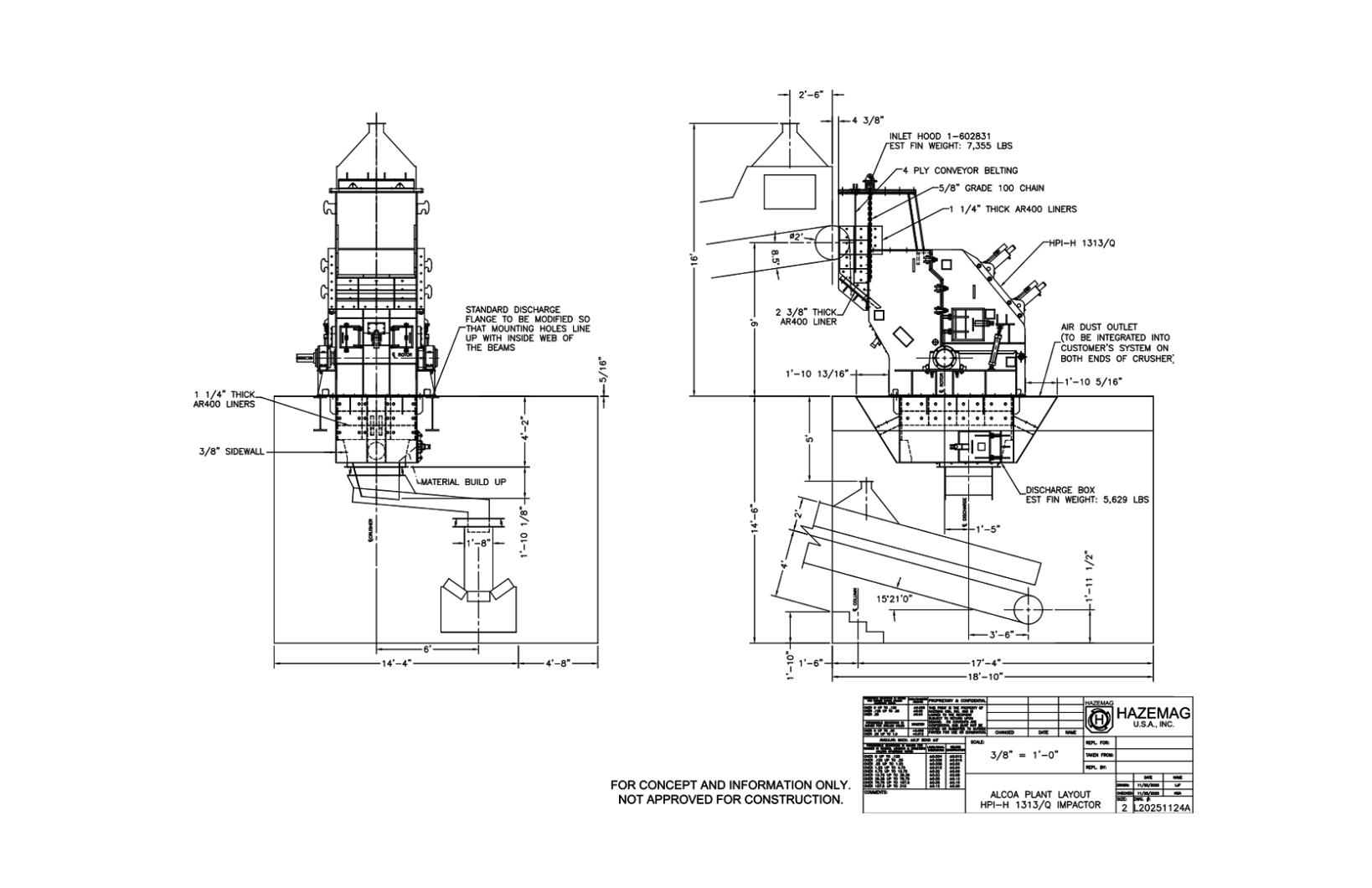
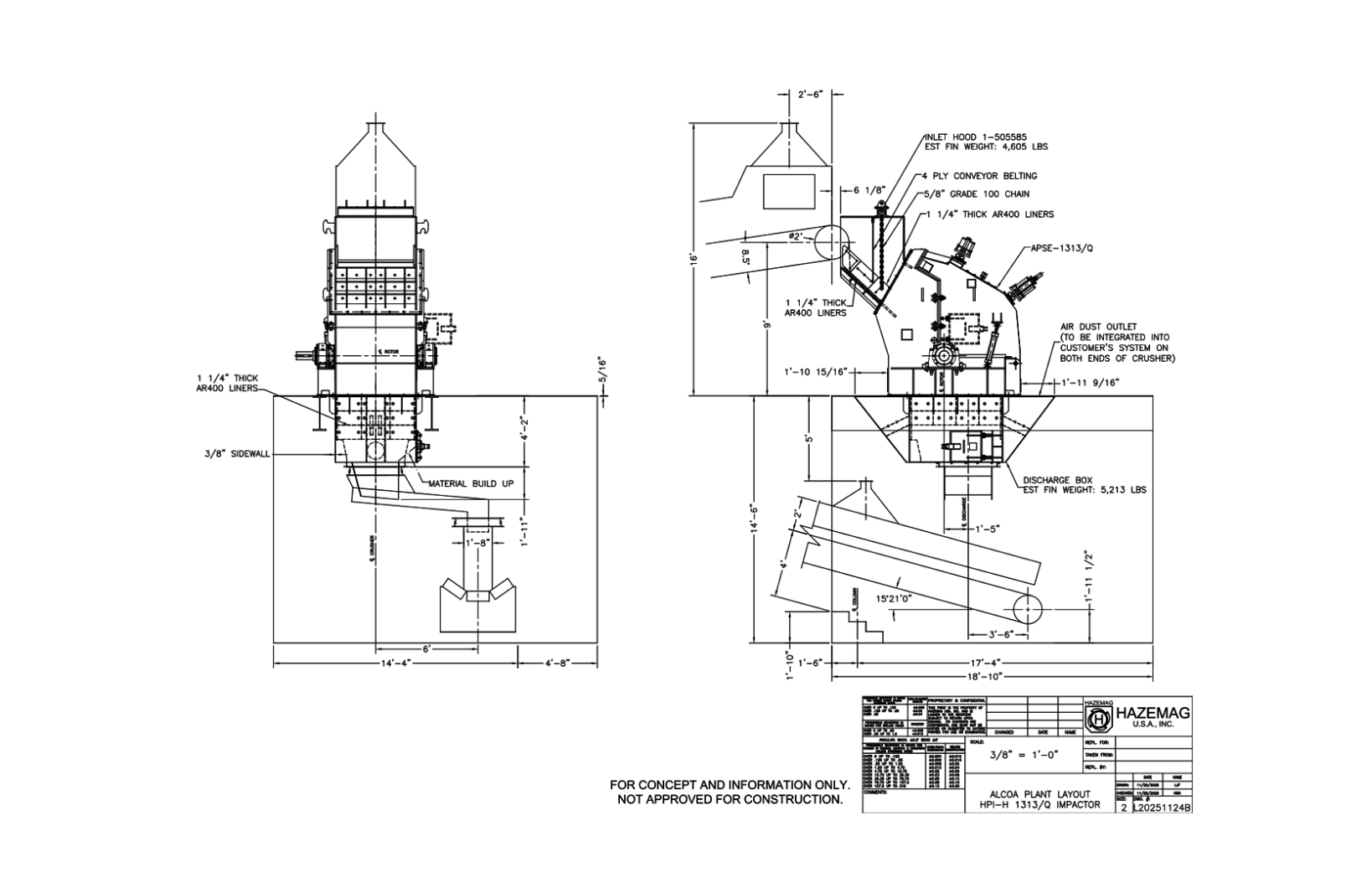
Proposal
HAZEMAG Proposal
HAZEMAG Proposal
HAZEMAG
System Design
Thank You!